Become a member
A worldwide cooperative of universities

Stop paying for patents nobody uses. Earn from the ones industry needs.

Every year your university pays to keep hundreds of patents alive, and most of them are never used. We help you see which ones are worth it. Then a team you share with other universities takes the good ones to the companies that need them.

The whole idea in under three minutes

A tall stack of papers full of coloured sticky notes.
Sound familiar?

Hundreds of patents. A few people. A pile of renewal invoices.

In most technology transfer offices a handful of people look after hundreds of patents in dozens of fields. Every year the renewal invoices come in, country by country. Nobody has time to find out which patents a company would ever want, so most universities just keep paying.

We looked at the public patent data of one European technical university:

517patents still protected
≈ €1.2 millionrenewal fees this year
1 scanto see it all

Estimate from public EPO data and official renewal fees on 8 October 2026, including an assumed service cost of €150 per country per year. Existing licences were not known to the scan.

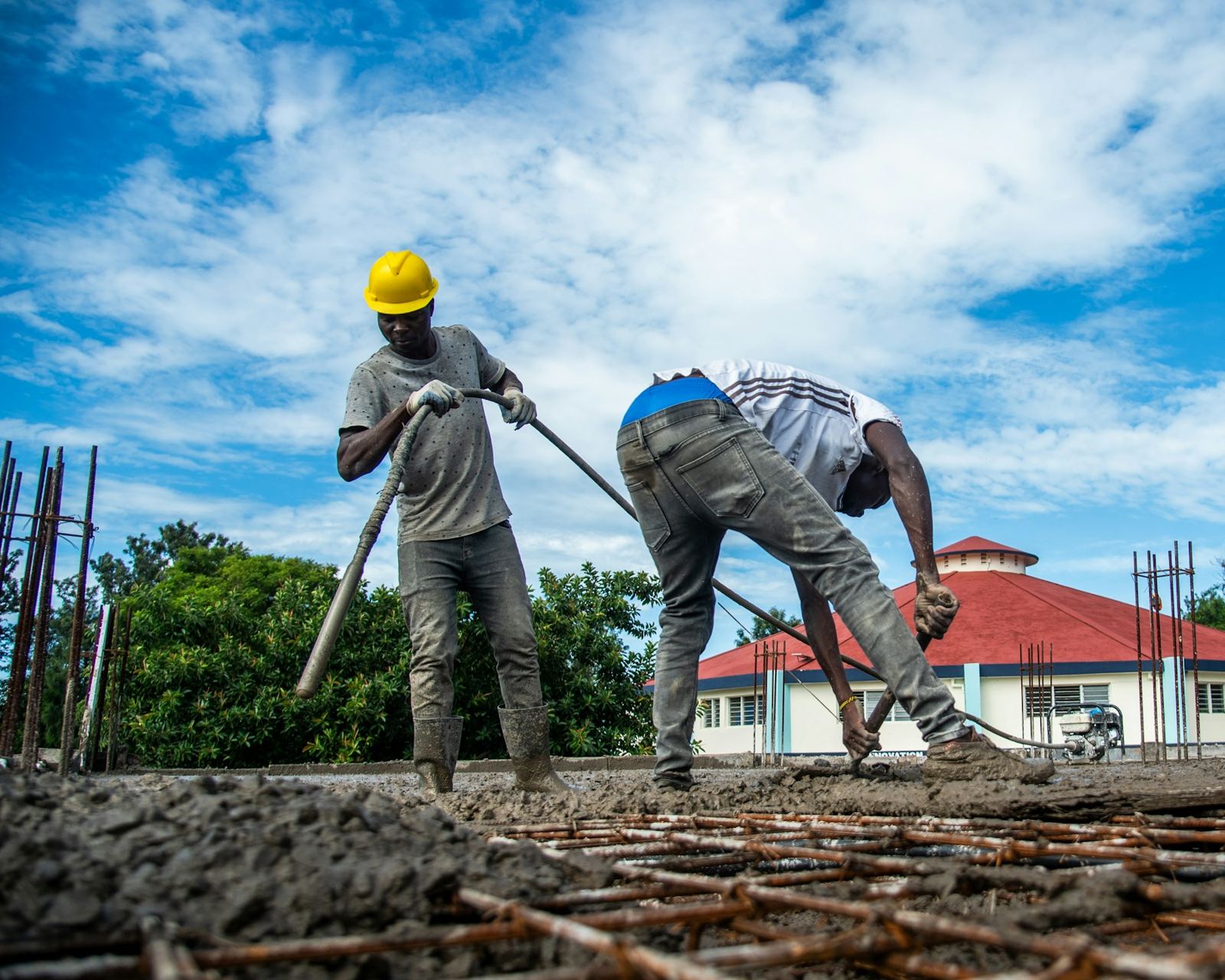
Builders pouring fresh concrete on a building site.
One invention

Concrete that closes its own cracks.

In 2010, researchers at Delft University of Technology patented a healing agent for concrete: mixed in when the concrete is poured, it lets small cracks close by themselves, so buildings and bridges last longer with less repair.

Since then, other inventors have built on it. 24 later patents by others cite it. These companies filed them:

Biomason · 7 patentsHitachi Chemical · 2China Railway Major Bridge EngineeringBaker Hughes

The patent is still protected in 7 countries, for about four more years. This is what Patent Platform looks for: an invention that companies already build on. The question for the university is simple — who talks to those companies before the time runs out?

EP2556037 and its family. From public EPO data, 27 October 2026. Delft University of Technology is not a member of the cooperative; this is an example, not an offer.
How it works

Scan. Decide. Earn.

The platform does the counting. People make every decision.

1 · SCAN

See all your patents

Type your university's name. We load every patent from the worldwide data of the European Patent Office: where it is protected, what it costs, and which companies cite it.

2 · DECIDE

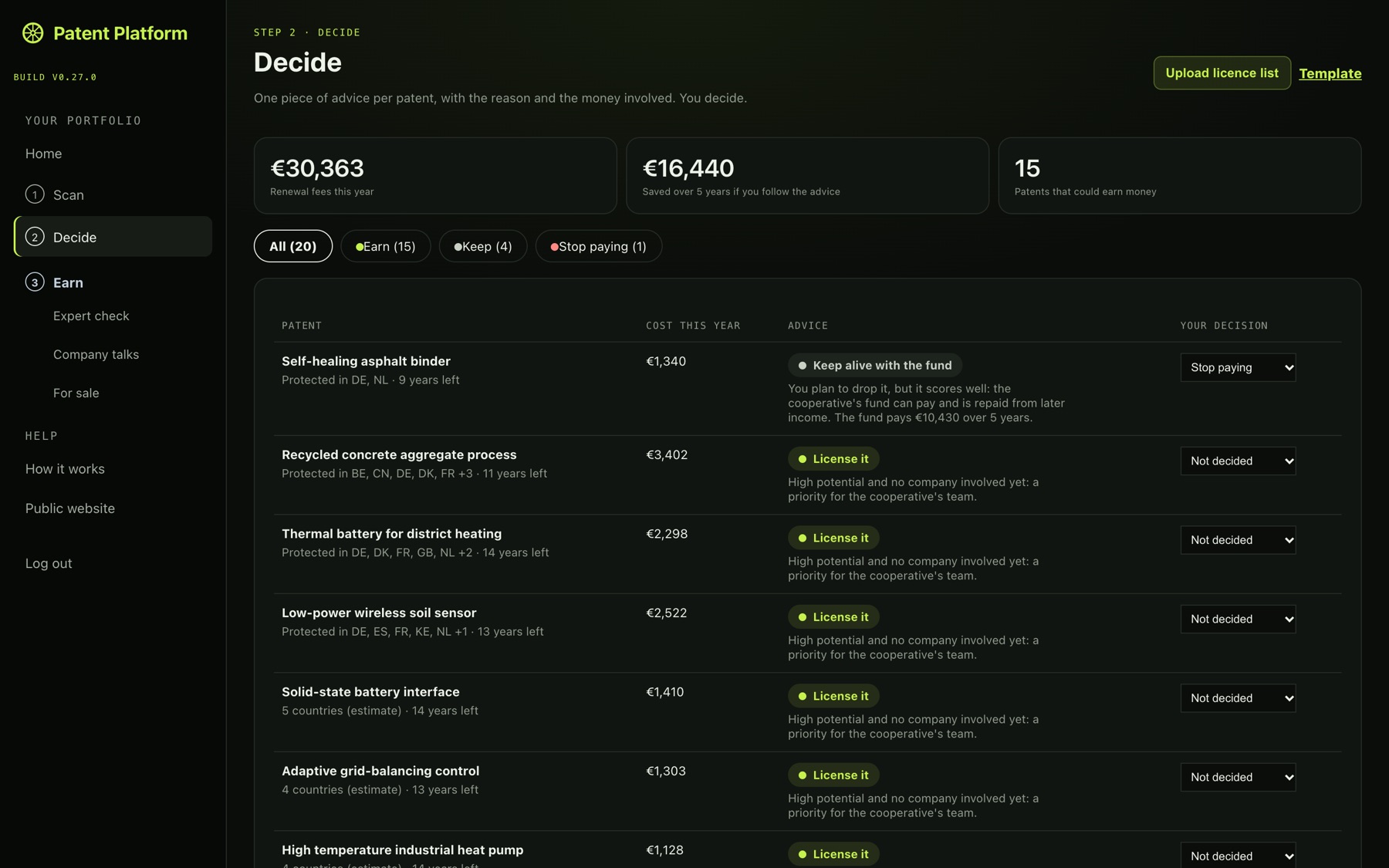
One piece of advice per patent

With the reason and the money involved. You decide, one by one or many at once.

● Earn● Keep● Stop paying
3 · EARN

A professor checks, our team talks

A researcher who knows the field checks each promising patent. Then the cooperative's team talks to the companies that need it. Patents you drop are first offered to investors.

Step 2 in the portal: every patent with its cost this year and one piece of advice in three colours.

Step 2 in the portal: every patent, one piece of advice · demonstration data

What you get

Savings first. Income on top.

Next yearSavings

Stop paying for the weakest patents. The renewal fees you save start next year — before any licence is signed.

After thatIncome

The good patents are licensed or sold by a team you could not afford on your own. Most of the money goes to you.

Already worldwide

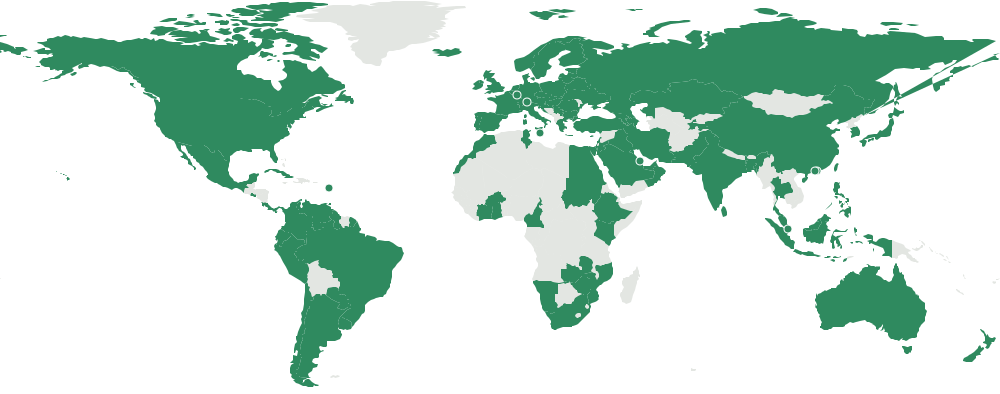
We have scanned 177 universities in 105 countries.

For each country, the universities with the most patents in public patent data. Is yours one of them? Ask us for your scan and we will walk you through it.

World map. Countries in green: at least one university scanned, on every continent.
At least one university scannedNot yetThe map shows only countries. What a scan finds stays with the university.
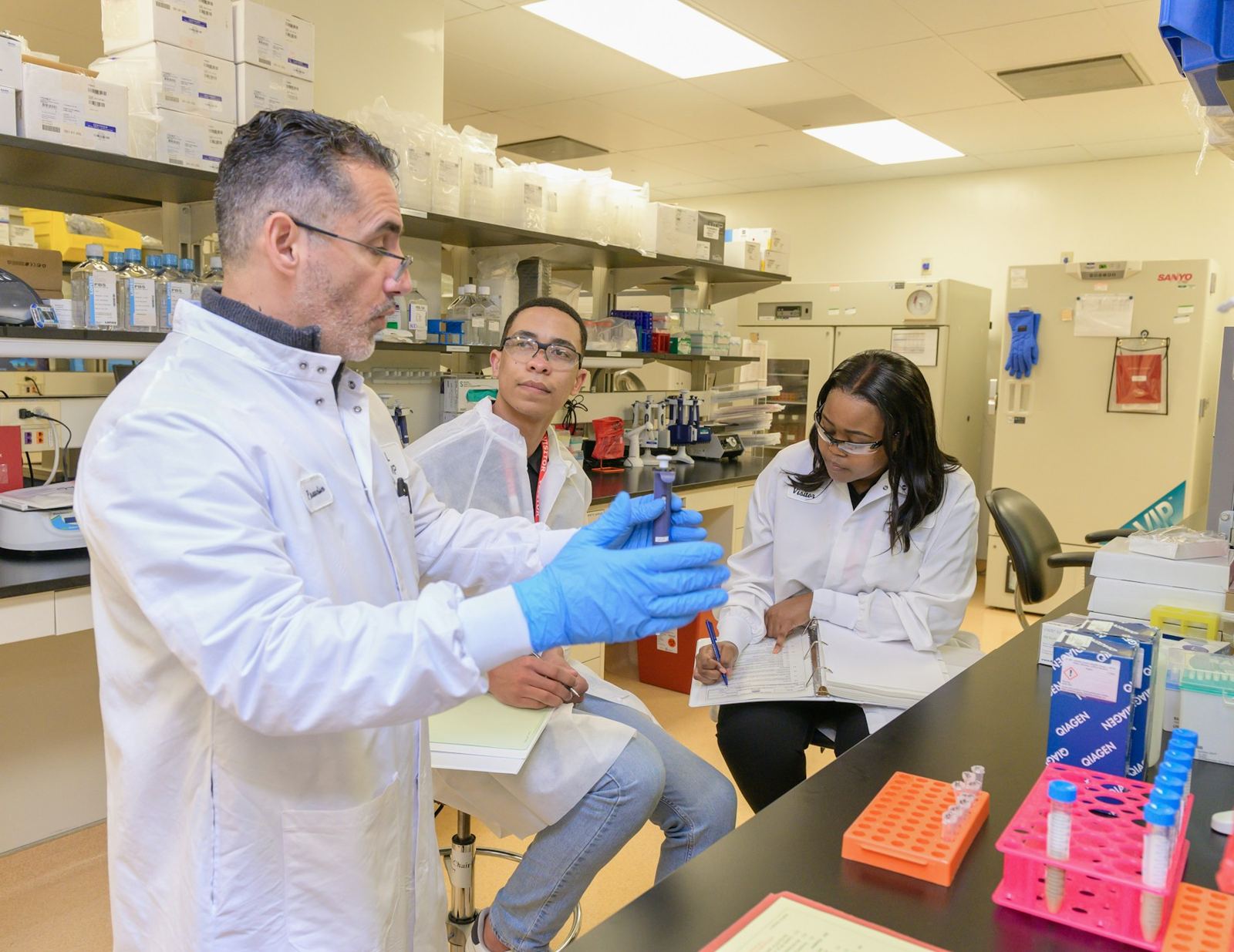
Researchers in a laboratory looking at a sample together.
The cooperative

You keep your patents. We share one team.

Universities, research institutes and university hospitals join as members, not as customers. Together they can afford what none of them can alone: people whose job is to talk to companies.

Your patents stay yours

You choose which patents the team may offer, and you approve every deal.

One shared team

People who know a sector and its companies, working for all members, worldwide.

Most of the money is yours

The university that owns the patent gets most of each licence; a small share goes to all members.

How the cooperative is set up →

Who we are

People, not a platform.

“Universities are full of inventions that could help someone, somewhere. Too many of them sit in a drawer, while the university keeps paying to protect them. We started Patent Platform so that universities can afford, together, the people who bring those inventions to the companies that need them.”

“We are looking for the first members to build this with us, and for the colleagues who will do the work: people who know a sector, its companies and how a licence is made.”

Patent Platform is an initiative of Dr. Sattar Emamian, Geert Jan Hoogeslag and Dirk de Koning
Rather talk to a person?

Half an hour, your questions.

Whether you run a transfer office, lead a research group or look for technology: book a 30-minute call with us. We look at your situation together — for universities, with a scan of your own patents.

A small group of colleagues talking around a table.
Founding members

Start with a scan of your own patents.

We are looking for three to five universities from different parts of the world to found the cooperative and set its rules together.

Questions

Good to know.

Do we keep ownership of our patents?

Yes. You decide per patent whether it stays private or the cooperative's team may offer it to companies, and you approve every deal.

What does membership cost?

A yearly contribution that depends on your country's income level, so that universities anywhere can join on fair terms. It pays for the shared team, the platform and a fund that keeps promising patents alive. The founding members set the amounts together.

How is the income shared?

Most of each licence goes to the university that owns the patent, which pays its inventors under its own rules. A small share goes to all members. The exact split is set by the founding members.

What happens to a patent we stop paying for?

First it is offered to investors and companies for a few weeks. If nobody takes it, you simply stop paying the renewal fees and the patent lapses.

What if a good patent is too expensive to keep?

The cooperative's fund can pay its renewal fees. The fund is repaid first from the income that patent earns later.

Where does the data come from?

From the European Patent Office, which covers patents worldwide. Patents it does not hold, such as many national patents in Africa and Asia, members can add as a list. Costs use the official renewal fees of each patent office; estimates are marked as such.

Is this a valuation or legal advice?

No. The advice helps you sort your patents. Ownership, legal status and technical readiness are checked by specialists before any deal.